
update: 06/02/2026
In a rapidly changing world, the ability to learn hard things quickly is becoming an increasingly valuable skill. While many people rely on passive review, modern research and the practices of “ultralearners” suggest that learning is most effective when it is self-directed, intense, and focused on active production rather than simple consumption.
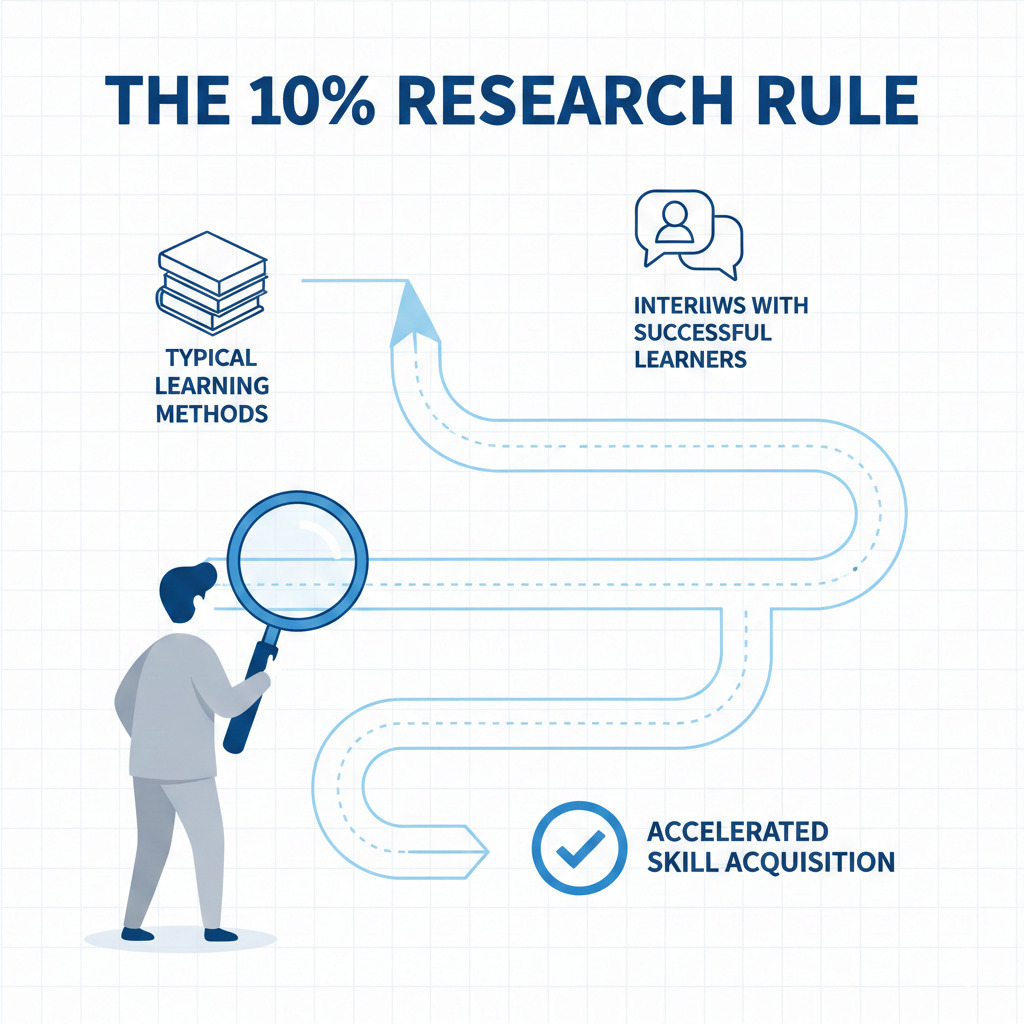
To master a new topic or skill at an accelerated rate, you must move beyond traditional “checklists” and align your study habits with how the brain actually processes information.
1. Master the Map with Metalearning
Before diving into a new subject, you should spend approximately 10% of your total study time on research, a process known as metalearning. This involves:
• Mapping the subject: Identifying what kinds of information and sub-skills must be mastered.
• Identifying resources: Interviewing successful learners or researching the best tools and methods for that specific niche.
• Understanding the “Why”: Determining if your project is instrumental (to achieve a non-learning result) or intrinsic (learning for its own sake).
2. Use the Feynman Technique to Identify Gaps
Named after physicist Richard Feynman, this method is designed to help you pinpoint “problem areas” in your understanding. The process is simple:

1. Write the concept name at the top of a sheet of paper.
2. Explain it in plain language as if you were teaching it to a child or someone without your current knowledge base.
3. Identify the “stuck” points where you resort to complex jargon or cannot explain a step clearly.
4. Go back to the source material to shore up those specific weaknesses before re-simplifying your explanation.
3. Prioritize Retrieval Practice over Review
Most students spend their time rereading notes, but retrieval practice—getting information out of your head—is significantly more effective for long-term retention than lectures or note-taking.
• Self-Testing: Push yourself to solve problems or recall information before you feel fully “ready” or “confident”.
• Desirable Difficulty: The more effortful the act of retrieval, the more it strengthens your memory, provided the attempt is successful.
• Low-Stakes Quizzing: Use flashcards or ungraded quizzes to constantly bring information back to mind.
4. Manage Cognitive Fatigue with the Pomodoro Technique
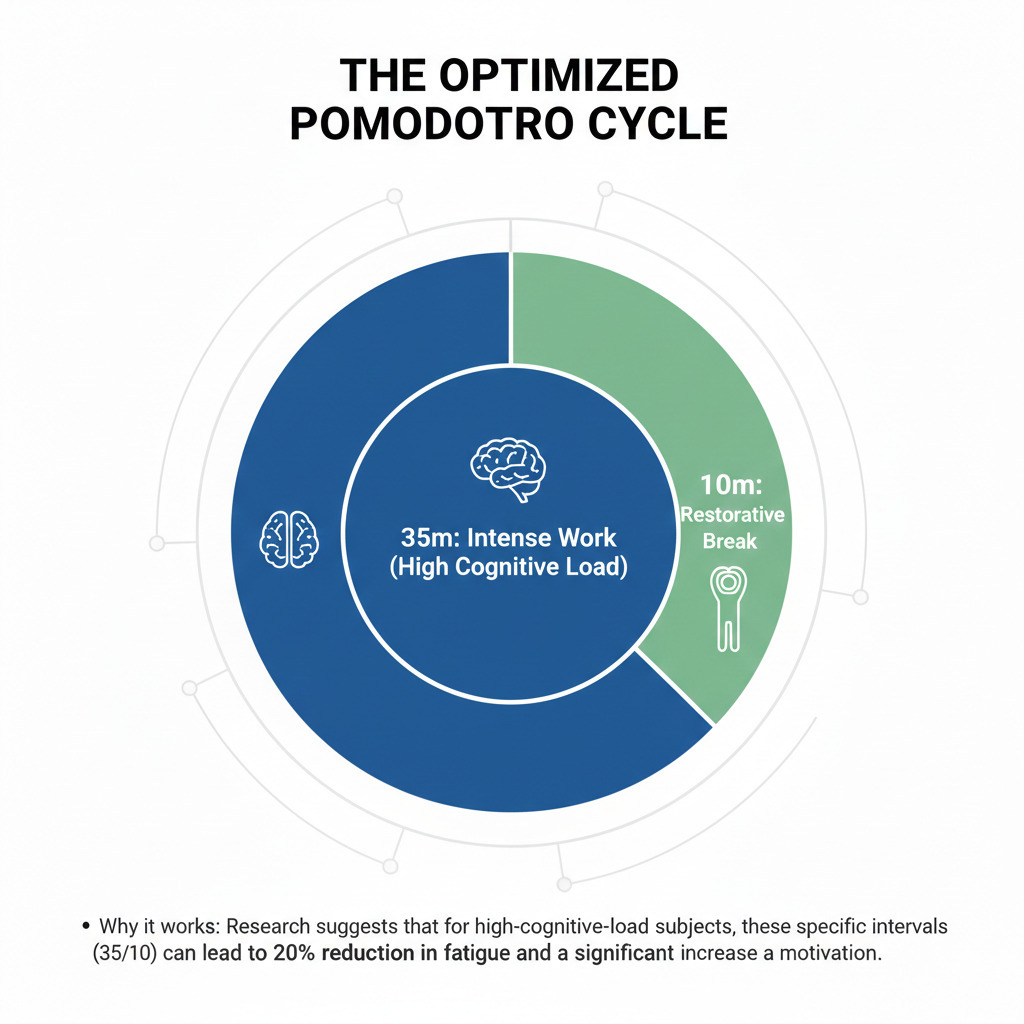
Sustained attention is difficult; breaking work into focused intervals followed by short breaks can help manage cognitive load and reduce mental fatigue.
• The Standard Cycle: Work for 25 minutes (one “Pomodoro”) followed by a 5-minute break.
• Variations for Complex Topics: For high-cognitive-load subjects like anatomy, research suggests 35-minute work intervals with 10-minute breaks may be more effective for maintaining spatial reasoning and concentration.
• Benefits: Studies show that structured Pomodoro intervals can lead to a 20% reduction in fatigue and a significant increase in motivation compared to self-paced study.
5. Practice with Directness and Drills
A common failure in learning is the “transfer problem”—learning a skill in a classroom but being unable to use it in real life.
• Directness: Learn by doing the thing you want to be good at in the environment where you will actually use it.
• The Direct-Then-Drill Approach: Start with direct practice to identify your “rate-determining step”—the bottleneck holding back your overall performance. Isolate that specific component for intense drills, then integrate it back into the full skill.
6. Leverage Spaced Repetition for Permanent Retention
To prevent memories from decaying, you must space out your exposure to information. Distributed Practice Theory suggests that frequent, active engagement over time is superior to “cramming,” as it allows for better memory consolidation. By reviewing information at increasing intervals, you ensure that the neural pathways associated with that knowledge are reinforced just as they are about to be forgotten.
Summary for Success
Learning faster is not about “gaming the system” but about intentionality and quality over quantity. By focusing on user intent—whether you are seeking information or trying to complete a transaction—you can tailor these techniques to your specific goals. Ultimately, true mastery comes from experimentation; use these principles as a starting point, but be ruthless in discarding methods that do not work for your unique learning style.
This learning approach is also suitable for learning how to build an online business: Getting Started Now

Read More : How to Get What You Really Want